






R&D MINUTE
AT THE HEART OF NANOVENT® TECHNOLOGY

Nanovent® technology, developed by Samaya, is the first membrane specifically designed for tents. It now makes it possible to offer single-wall tents optimized in terms of breathability and air permeability, without compromising on waterproofness. Ghislain Pipers, co-founder of Samaya, explains the design choice of the single-wall construction and the essential characteristics of Nanovent® technology.
Ghislain Pipers: Nanovent® is a technology we developed to design our single-wall tents. This technology consists of a random interlacing of polyurethane filaments of nanometric size, which is 1 million times smaller than 1 meter. The electrospinning process allows us to manage the density of the interlacing so that the pores of the membrane are large enough to let air pass through, but too small to let water droplets through. We combine this electrospun membrane with two layers of nylon. The inner layer is a hydrophilic nylon that allows water, when condensation appears, to spread over a large surface area and therefore dry more quickly. The outer layer is a hydrophobic nylon, thanks to a water-repellent treatment, which promotes the fluid runoff of water on its surface. These layers ensure the mechanical strength of the fabric while protecting the electrospun membrane.
GP: On the market, the majority of tents are designed with double walls. This design involves the presence of two fabrics to separate the living area of the tent from its outside environment, a system that makes the product heavier and increases its folded volume. At Samaya, we saw the single-wall design as an opportunity to revolutionize equipment and bivouacking for many uses. Imagining and offering single-wall tents optimized for waterproofness, breathability, and air permeability became an obsession for our Research & Development team. Gradually, we realized that the single-wall tent offered many more advantages than just weight savings. This design also allows for better resistance to wind and bad weather due to the greater cohesion between the various elements of the tent. Depending on the conditions, the ease of setup and teardown can also prove to be invaluable.
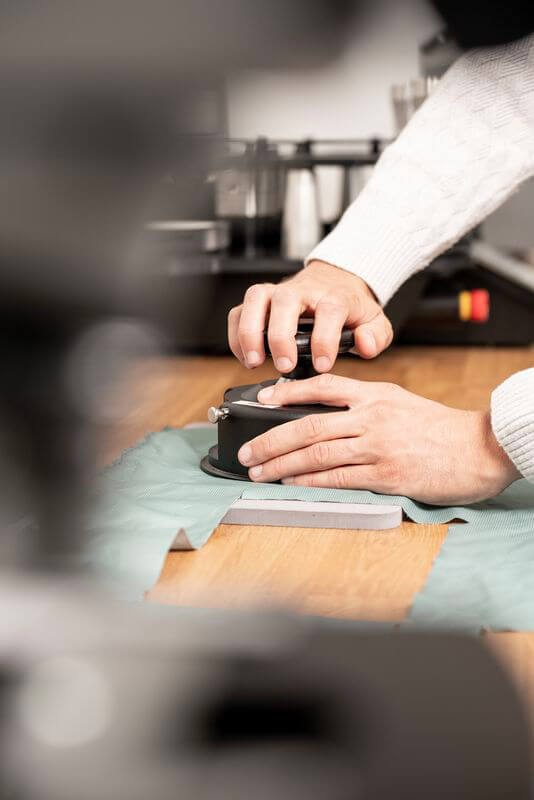
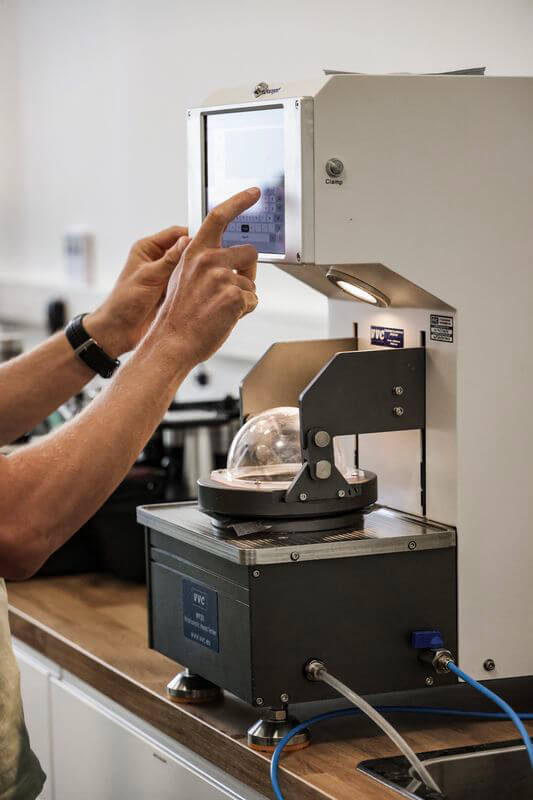
GP : We have identified three criteria essential to the effectiveness of single-wall tents: waterproofness, air permeability, and breathability.
For waterproofness, our walls have a waterproof rating of 10,000 mm, keeping in mind that the equivalent in water column generated by very heavy rain without friction is 2,000 to 3,000 mm. For the floor, the pressure exerted by the individual's weight requires higher waterproofness. Consequently, the majority of our 4-season tent floors have a waterproof rating of 20,000 mm.

As for air permeability, it is essential that the single wall allows air renewal phenomena to occur, whether through pressure or molecular diffusion. For the former, it is about letting an airflow pass through, via the pressure it exerts on the wall, so that it flushes out the CO2 emitted by the user's breathing and brings in fresh oxygen. For the latter, the single wall must allow this natural phenomenon of environmental homogenization to take place, so that the different levels of material concentration (in our case, the CO2 and O2 levels) inside and outside the tent tend to equalize.
Finally, the single wall must allow for breathability, which is understood as the capacity of a fabric to evacuate water vapor, particularly that generated by breathing, since an individual produces an average of 800 mL of water in 24 hours.
We have designed and optimized our Nanovent® membrane to ensure it achieves these three criteria, regardless of weather conditions or terrain.

